
When You Thought You Found Your Purpose

There’s a strange kind of grief that comes when you realize the purpose you once believed in so deeply may no longer be yours.

At one point, it likely felt clear. You poured your time, energy, and heart into it. You shaped parts of your life around it. Maybe it was a career, a passion, or a dream that once gave your days direction and meaning. And for a while, it fit. It felt like the answer.

But life has a way of changing us.

Figure 1. Greater Good Science Center. (n.d.). Seven ways to find your purpose in life [Photograph]. University of California, Berkeley. https://greatergood.berkeley.edu/article/item/seven_ways_to_find_your_purpose_in_life

Sometimes the things that once felt like purpose were actually stepping stones. Important, meaningful chapters that helped us grow into who we are today. Letting go of that version of purpose can feel disorienting, almost like losing a part of your identity.

Yet purpose isn’t always something we find once and hold forever. It evolves with us.

What once felt like the right path may have simply prepared you for the next one. The skills you developed, the experiences you gathered, and the lessons you learned don’t disappear just because your direction changes. They come with you.

Finding purpose again after believing you had already found it requires a different kind of openness. It asks you to listen closely to what now feels meaningful. It asks you to trust that growth sometimes means outgrowing the dreams you once held tightly.

And perhaps the most comforting realization is this: purpose isn’t a single destination. It’s something we continue discovering as we change, learn, and move forward.

Sometimes losing one sense of purpose is simply the beginning of finding another.
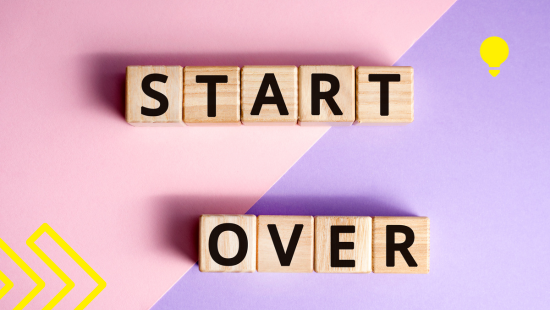
Starting Over in Your Late Thirties

There’s a quiet kind of courage that comes with starting over in your late thirties. It’s different from the fearless leaps we take in our twenties, when the world feels wide open and time seems endless. By this stage of life, starting over often means letting go of things you once believed would define you: careers, identities, plans you built carefully over the years. And that can feel terrifying.

Figure 1. Sheevo. (2023, December 11). Starting over in your 30s with courage and confidence [Photograph]. https://sheevo.com/starting-over-in-your-30s-with-courage-and-confidence/

But starting over at this age also comes with something powerful: clarity. You’ve lived enough life to understand what truly matters and what doesn’t. You’ve experienced success and disappointment, learned what drains your energy and what gives it back. The decisions you make now are rarely impulsive. They’re thoughtful, intentional, and often rooted in a deeper understanding of yourself.

There’s also a quiet strength in realizing that life doesn’t have to follow a linear timeline. Society often suggests that by your late thirties, you should have things “figured out.” But the truth is that life unfolds in chapters, and sometimes the most meaningful chapters come after unexpected turns.

Starting over doesn’t mean failure. Sometimes it means growth. Sometimes it means choosing alignment over comfort. And sometimes it simply means having the courage to admit that the person you were ten years ago is not the person you are today.

If anything, starting over later in life reminds us that it’s never too late to rewrite our story. It just means the story we’re writing now comes with more wisdom, more intention, and a deeper understanding of who we’re becoming.